
 Sep 30, 2026
Private Label Nasal Strips Manufacturer: Vet an OEM
Vet a private label nasal strips manufacturer the way serious buyers do: capacity, IQC/IPQC/FQC, ISO 13485 documents, NDA and DDP, before you commit.
Table of Contents
- Who are you actually dealing with?
- Can the manufacturer actually deliver at scale?
- How is consistency controlled across a large run?
- What can be customized — and what does that change?
- Why quality over price is the right lens here
- Which documents and certifications can you provide?
- Will my brand and product idea be protected?
- How do international buyers handle shipping and total landed cost?
- A lower-risk way to start
- FAQ
If you’re sourcing a private label nasal strips manufacturer, the real question isn’t “can someone print my logo on a strip?” — almost any factory will say yes. The question that decides whether your launch succeeds is harder: will this supplier hold quality across a 100,000-unit run, hand you the documents your market asks for, and protect your brand while doing it?
This page is written for that decision. If you already have an audience and you’re choosing a long-term manufacturing partner — not the cheapest quote — here’s how to evaluate one, and how we answer each question.
- Vet capacity and consistency first: up to ~10 million pieces per month, with IQC/IPQC/FQC inspection and dedicated peel-strength, retentivity and video-measurement equipment.
- Sample lead time runs 3–7 days; standard production about 15–25 days, extending to roughly 15–25 days with custom packaging or die-cut shapes.
- Packaging-only customization carries the most flexible minimums; logo, color, material and custom shapes each step the MOQ up.
- Certificates (ISO 13485, FDA registration, ISO 10993, CE) are provided current, on request — never as numbers written on a page.
Who are you actually dealing with?
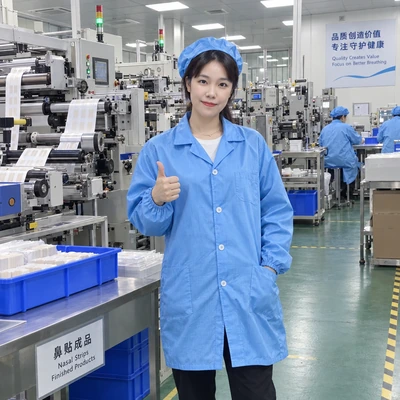
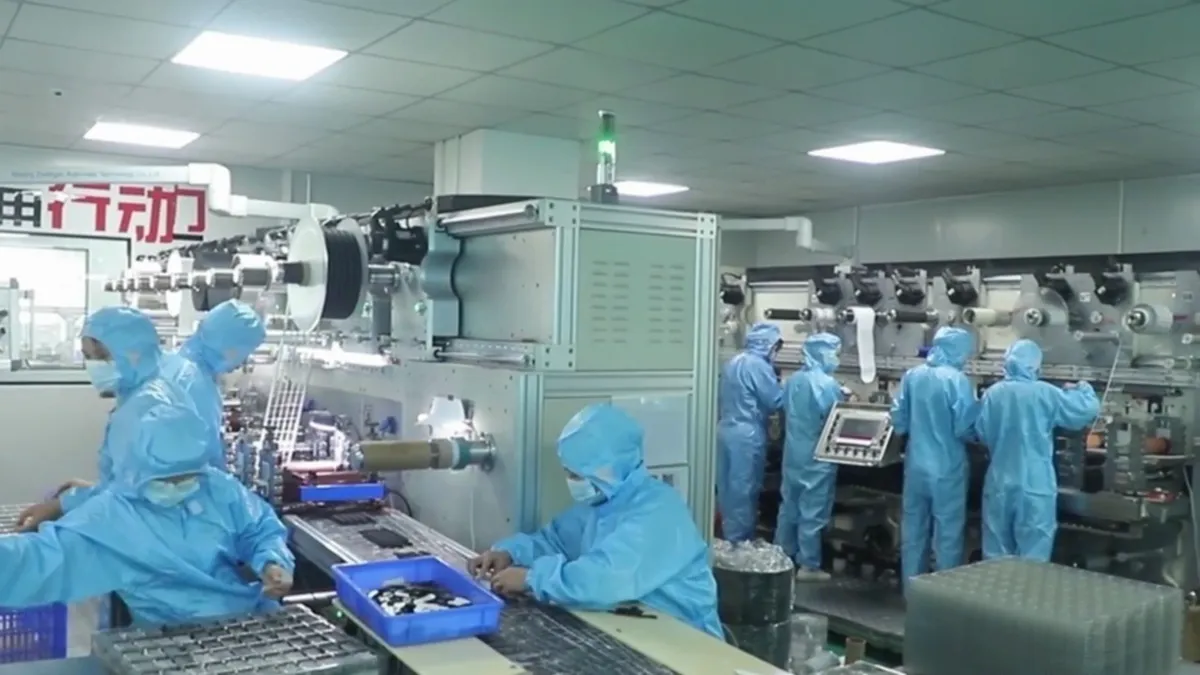
Before capability questions, ask the identity question. Vitazora works with qualified manufacturing partners operating an third-party audit-verified facility of roughly 1,800 square meters and about 50 staff, supporting English and Chinese communication. The audit profile, equipment list and production records can be reviewed during qualification — and detailed quality documentation is available under NDA. We are a focused skin-adhesive specialist: nasal strips, mouth tape and their packaging, not a general disposables factory, and not a trading desk.
Can the manufacturer actually deliver at scale?
A sample looks perfect. The risk lives in the bulk order. Before you commit, confirm the supplier’s real production capacity against your growth, not just your first order.
Our nasal strip manufacturing runs to up to around 10 million pieces per month, which comfortably covers first orders in the tens of thousands as well as larger programs in the 100,000–200,000+ range. Sample lead time is around 3–7 days; standard production lead time is around 15–25 days, extending to roughly 15–25 days for custom packaging or custom die-cut shapes. (Timelines are confirmed per order.)
Ask any shortlisted supplier for their monthly capacity and a realistic lead time at your target volume — not just the sample turnaround.
How is consistency controlled across a large run?
This is the question that separates a trading desk from a manufacturer. For nasal strips, the two things that drift in bulk are adhesion and dimensions — and those are exactly what a buyer feels as “the reorder isn’t as good as the sample.”
Our quality control covers incoming (IQC), in-process (IPQC) and final (FQC) inspection, with a dedicated first-article inspection step. The lab is equipped to measure the properties that matter for nasal strips directly:
- a computer-type peel-strength tester for adhesion / peel force,
- a retentivity tester for hold over time,
- a video measuring system (VMS) for dimensional accuracy.
Quality is managed under an ISO 13485 quality management system. Detailed sampling levels and the internal quality process can be shared under NDA during qualification.
What can be customized — and what does that change?
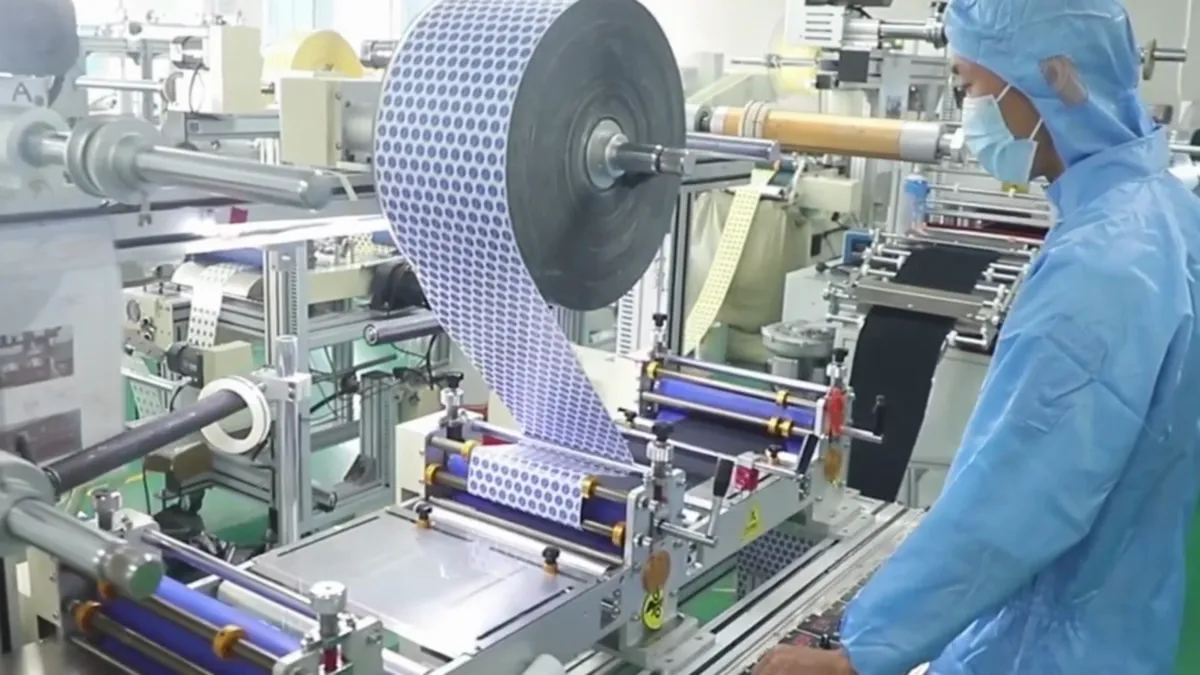
“Private label” spans a wide range, and each level affects MOQ and lead time. Available customization includes logo and label printing, packaging, color, size, graphics, and material, plus design support based on either your existing sample or your graphic design.
A few practical notes buyers ask about:
- Packaging-only customization carries the most flexible minimums — for many new brands it’s the lower-risk first step.
- Adding logo print, custom colors, scents or specialty print effects steps the minimum up.
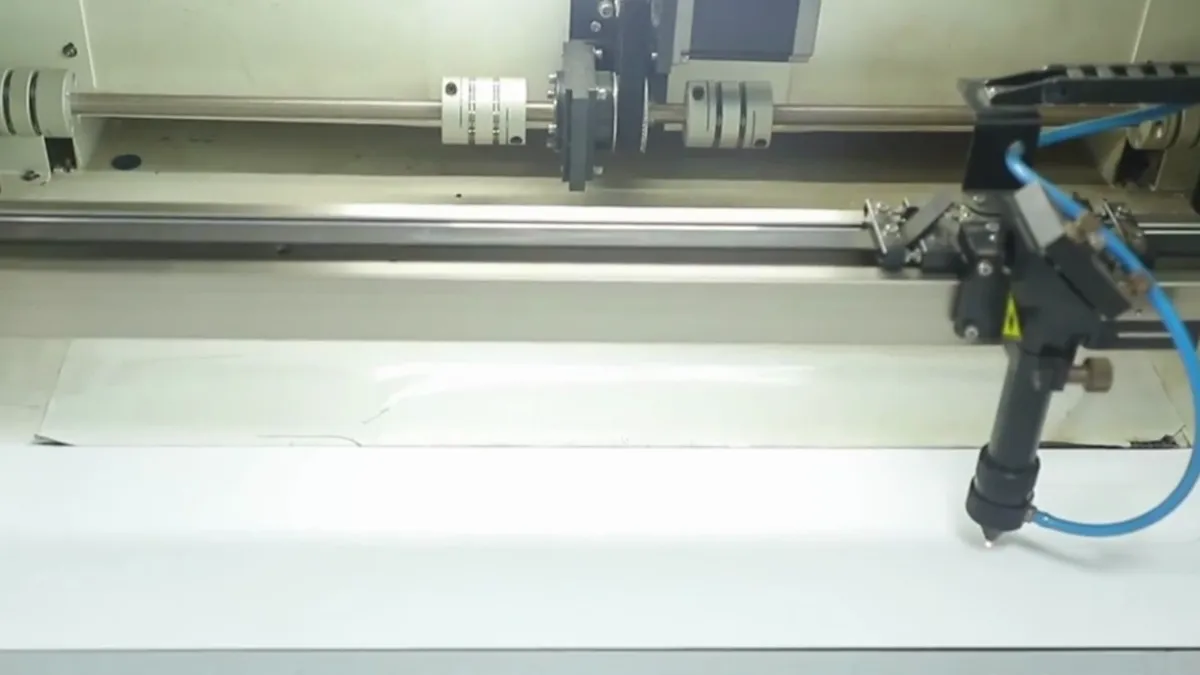
- Custom die-cut shapes involve a one-time mold setup and a higher minimum, because tooling is involved.
Exact MOQ depends on which of these you choose — a common first-order discussion range is 1,000–15,000 pcs depending on customization level (a pack typically holds 5–50 strips, and the count is customizable), confirmed per configuration. So the honest answer to “what’s your MOQ?” is “it depends on the customization, and we’ll confirm the range for your spec.”

Why quality over price is the right lens here
One of the clearest signals from serious buyers is this: quality and performance are the priority over price. We agree — and we build for it. For a nasal strip, the experience a wearer judges is adhesion that holds without being harsh to remove and comfort over the wear period. That’s why adhesive and retentivity are tested on dedicated equipment rather than left to a spec sheet.
Our role isn’t to be the cheapest line item. It’s to lower the cost of getting it wrong — by helping you test samples before bulk, confirm documents before you commit, and scale without the reorder drifting.
I’ll say one thing plainly: I don’t recommend shortlisting a manufacturer on the lowest quote. The cheapest sample often hides the highest reorder risk — and for a nasal strip, a reorder that drifts on adhesion is the fastest way to lose the customers you just won.
Which documents and certifications can you provide?
Document gaps are where launches stall at customs or marketplace review. We can prepare product and material information for review, and the manufacturing holds ISO 13485, FDA registration, ISO 10993 (biocompatibility), CE, and materials-compliance documentation including REACH, RoHS, SVHC and a PFAS statement. Per-product test reports are available.
Because certificate versions are renewed periodically, current certificates are provided on request rather than published here. The exact document set differs by market, so for compliance-sensitive regions (EU/UK in particular) we confirm the required list for your target market first. See our document and certification checklist for the working list by market, including who holds the registration (it’s usually the brand, not the factory).
We don’t claim a certification before it’s confirmed for your product version, and we don’t position document support as a medical claim.
Will my brand and product idea be protected?
Yes — we can sign an NDA before sharing detailed program information, which matters most for buyers developing a differentiated or premium product.
How do international buyers handle shipping and total landed cost?
Professional buyers don’t ask about unit price first — they ask about landed cost. We can quote a DDP option, door-to-door, with customs cleared on both sides. Incoterms, payment terms, and the invoicing entity are confirmed per order, in line with the ICC Incoterms rules. (A common buyer question — “Is this DDP? Which Incoterms? Who invoices?” — is exactly what we settle before a quote, not after.)
A lower-risk way to start
You don’t need to commit to a bulk order to find out whether we’re the right partner. The next step is small and tells you most of what you need:
- A technical capability check against your spec, volume and target market.
- A sample validation plan — test print quality, adhesion, and feel across the options you’re considering, before any bulk decision.
If that’s useful, request a capability check and sample plan and we’ll prepare it for your specification. You can also review the nasal strips product line or our OEM capability overview first. For a condensed version, our seven-point supplier checklist covers the same ground as a quick scan, and the sample testing guide shows what to check before bulk.
FAQ
How do I know if a nasal strip supplier is a manufacturer or a trading company?
Ask for verifiable production evidence: an audit profile (ours is third-party audit-verified, ~1,800 m², ~50 staff), in-house QC equipment by name — peel-strength tester, retentivity tester, video measuring system — a first-article inspection step, and production records you can review under NDA. A trading desk can forward a sample; it can’t show you the line that made it.
What capacity and lead times should I plan around?
Up to around 10 million pieces per month of capacity; samples in 3–7 days; standard production about 15–25 days; roughly 15–25 days when custom packaging or custom die-cut shapes are involved. Exact dates are confirmed per order against your spec.
What MOQ should I budget for?
It depends on customization: packaging-only is the most flexible route, adding logo print steps it up, and custom shapes require tooling with a higher minimum. A common first-order discussion range is 1,000–15,000 pcs depending on customization level (5–50 strips per resealable bag, customizable), confirmed per configuration.
Do you sign NDAs before we share product ideas?
Yes. NDAs are available before detailed program information, artwork or unreleased concepts are discussed. AQL levels and internal quality documentation are shared under NDA during qualification.
Can I get current certificates, not copies from a website?
That’s exactly how we work: current ISO 13485, FDA registration, ISO 10993, CE and materials-compliance documents are provided on request during qualification, for your product version and target market — never as static numbers or scans published on a page.
About the author — Nancy is the founder of Vitazora, a specialist manufacturer of nasal strips and mouth tape for global brands. After six years across export trade and the factory side of skin-safe adhesive manufacturing, she helps DTC and distributor brands get from sample to a safe first order — without the compliance and reorder mistakes that sink new launches.
Note: nasal strips are positioned for breathing comfort and are not described as treating any medical condition. Material, certification and MOQ details are confirmed for your product version and market before quoting.
For brands and wholesale buyers: evaluate quality and customization options before bulk ordering. Free samples, shipping applies.
Request samples →