
For snoring, nasal strips and mouth tape work on different things: strips sit on the nose and mechanically lift the nasal passages open; tape keeps the lips gently closed so sleep breathing defaults to the nose. Many people try one, some use both. Mouth tape isn’t for everyone — skip it (and see a doctor) if you have untreated sleep apnea, a blocked nose, or reflux. If you’re a brand, the two products suit different audiences and buying habits; a starter kit lets you test both.
Snoring is one of the most-searched sleep problems, and two low-cost products keep coming up: nasal strips vs mouth tape for snoring. They sound like rivals. They’re not really — they target different causes, and the right pick depends on why you snore. Here’s a plain-English comparison, plus what a brand should know if you’re deciding which to launch.
Quick note before we start: these are comfort and breathing aids, not treatments for a medical condition. If snoring is loud and constant, or you wake up gasping, that’s a reason to see a doctor, not to buy tape.
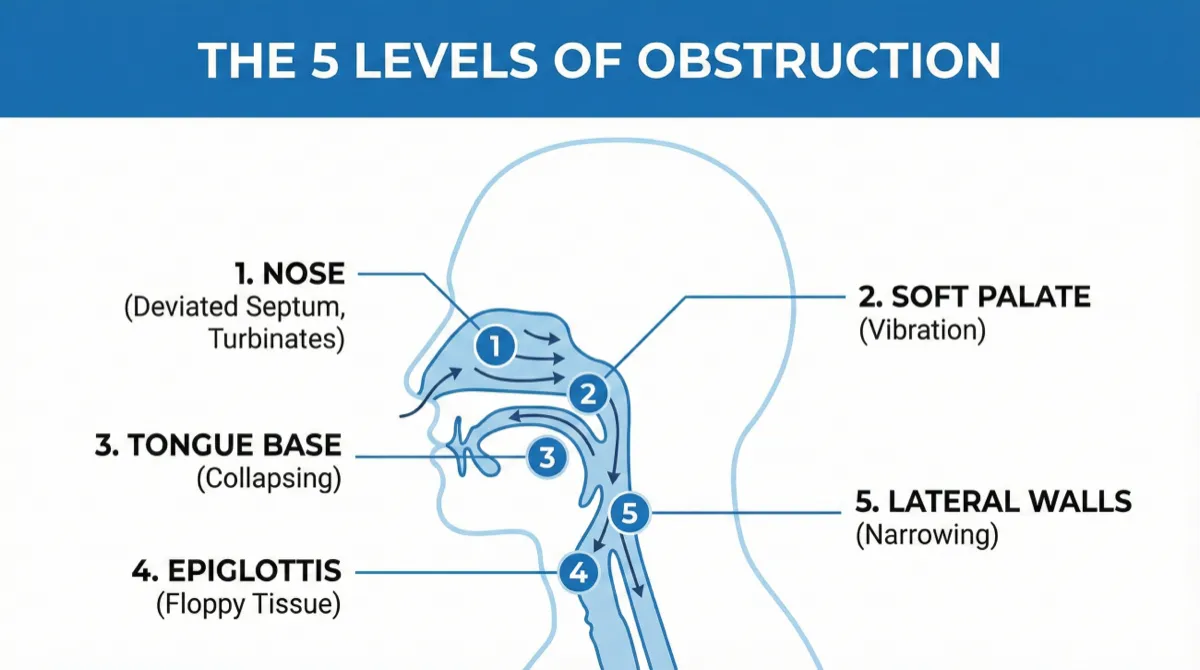
Nasal strips sit across the bridge of the nose. A flexible band gently lifts the sides of the nose open, which can make nasal airflow feel easier — useful if your snoring is tied to a stuffy or narrow nose.
Mouth tape does the opposite job. It keeps the lips gently closed so you breathe through your nose during sleep, instead of falling into open-mouth breathing (a common snoring trigger). It doesn’t force anything open; it just nudges the default toward nasal breathing.

Honest answer: it depends on the cause, and neither is a cure.
Try the cheaper, lower-commitment option first, and give it more than one night before you judge it.
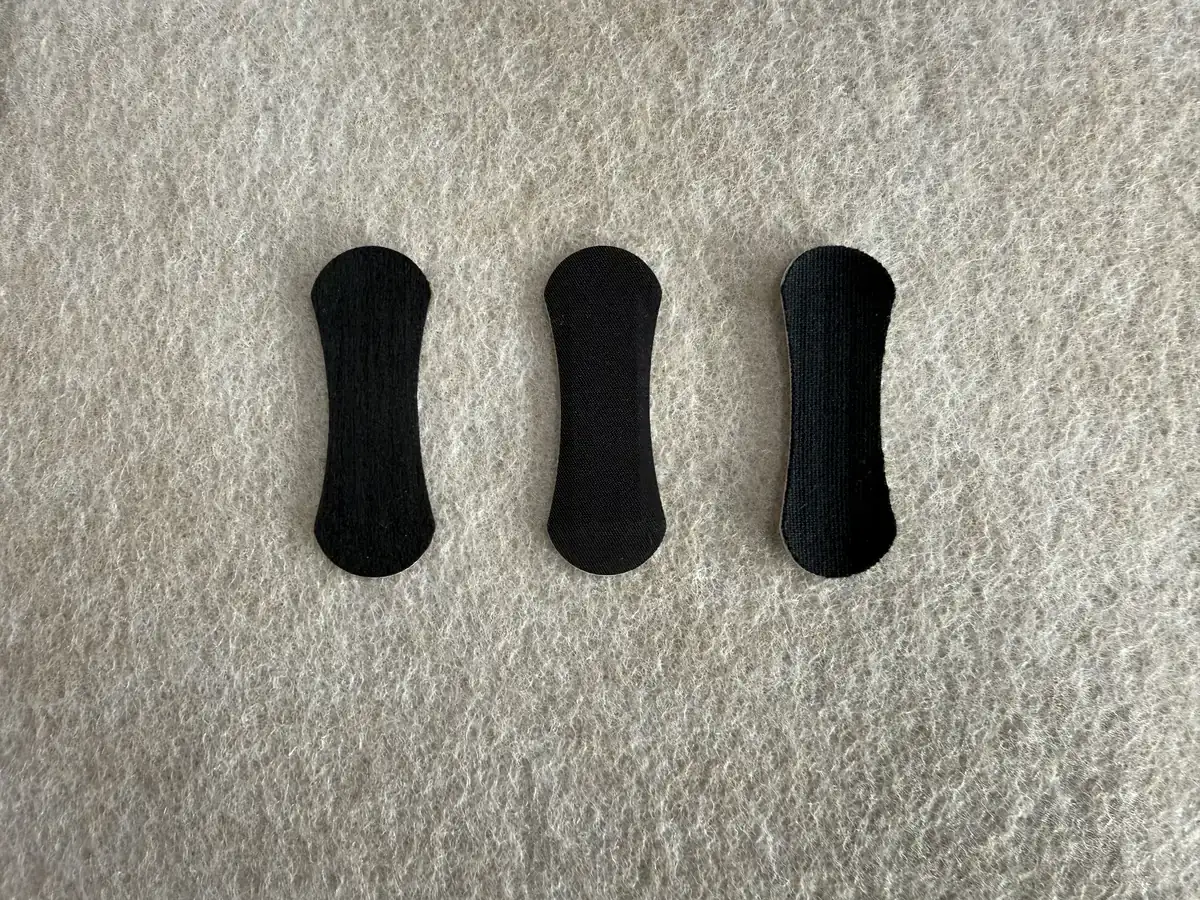
mouth tape and nasal strips, factory-direct – 10M+ pcs/month, samples in 3–7 days. Start with dropshipping or go private label.
This is the part responsible sellers skip, so I’ll say it plainly: mouth tape isn’t for everyone. Don’t use it — and talk to a doctor first — if you have untreated or suspected sleep apnea, a consistently blocked nose, reflux (GERD), or if it’s for a young child. For beginners who feel anxious about it, a vented or partial-coverage design is the sensible starting point.
That boundary matters for buyers and for brands. A product that’s honest about who shouldn’t use it earns more trust than one that promises everyone a silent night.
Whichever you choose, the daily experience comes down to the adhesive: it has to hold all night but come off in the morning without hurting. Materials range from basic non-woven to softer cotton or film backings, and skin-friendly or sensitive-skin options can be confirmed per version. Comfort is what decides whether someone actually keeps using it — so it’s worth testing, not assuming.
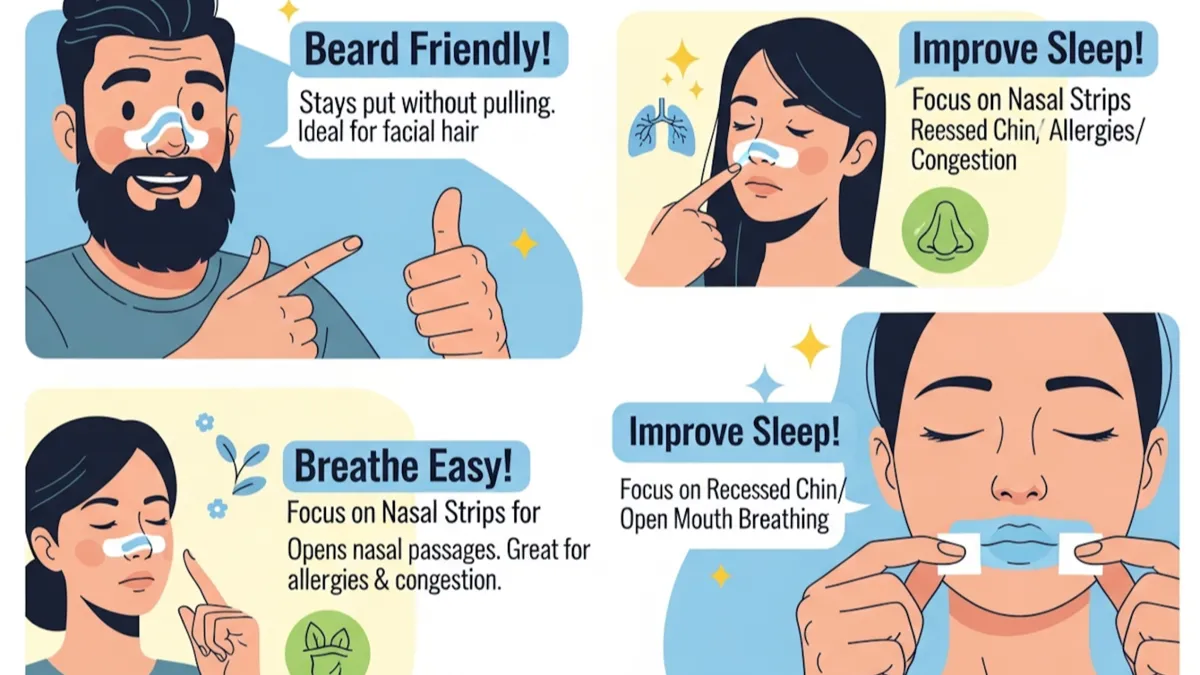
Not shopping — thinking about launching one of these? Then the real question is which to put in front of your audience first. Nasal strips have a low education barrier and a sports crossover; mouth tape leans toward repeat purchase and subscriptions, but needs more careful, safety-aware messaging. On materials, the two lines differ in what buyers feel: strips come in versions tuned for sport (stronger hold under sweat) versus sleep (gentler wear and removal), with non-woven, silk-touch and transparent PE backings; mouth tape runs cotton, rayon and lip-shaped designs — each version confirmed by sample before it goes in your line.
The commercial mechanics differ too. The MOQ conversation is customization-driven for both products: a packaging-only first order is the most flexible entry, and a common first-order discussion range is 1,000–15,000 pcs depending on customization level (a pack holds 5–50 strips, customizable), confirmed per configuration. Samples of both lines turn around in 3–7 days, so testing real adhesion and comfort on your own skin — before your customers do — is cheap. And the safety-aware messaging isn’t just copy: the vented/partial-coverage designs and clear “who shouldn’t use this” language are what keep a sleep-adjacent listing out of regulatory trouble in the EU and UK.
I wouldn’t bet a launch on one guess. The lower-risk move is to test both, see what your audience actually reorders, then scale the winner. If that’s the stage you’re at, our guide on choosing a private label nasal strips manufacturer walks through capacity, MOQ and documents — start there.
图片建议:
内链建议:(软桥接:转化交给 money page,正文不硬推)
消费者正文段不放 B 端 CTA;品牌 offramp 段集中放强内链。
外链建议: 鼻呼吸/一氧化氮机制可引权威健康科普或研究(authoritative,非商业、非疗效承诺);不链竞品商标;不链声称”治疗打鼾/OSA”的来源。
FAQ:
总结: For snoring, nasal strips open the nose and mouth tape encourages nasal breathing — different jobs, often used together, neither a cure. Match the product to the cause, try the simpler one first, and see a doctor if snoring is loud or constant. (Building a brand rather than shopping? The note above points you to the right next step.)
C 端对比题(nasal_strips_snoring_sleep + mouth_tape_sleep_snoring cluster);BC 混合角度 = 帮消费者选 + 品牌选品,导向 starter kit。与鲸鱼/量层已有稿受众、角度均不同 ✅。
无 treat/cure/OSA/guaranteed;明确”not a cure””see a doctor”;安全禁忌来自研究通识并导向就医;claims 守 Claims Boundary + 认证矩阵 §4。仍标 pending_review 待人审。
For snoring, nasal strips open the nose and mouth tape encourages nasal breathing — different jobs, often used together, neither a cure. Match the product to the cause, try the simpler one first, and see a doctor if snoring is loud or constant. (Building a brand rather than shopping? The note above points you to the right next step.) Comparing lines to launch? A starter kit tests both audiences before you scale.
They can ease nasal airflow if your snoring is linked to a stuffy or narrow nose. They’re a comfort aid, not a cure.
For many healthy adults it’s used to encourage nasal breathing, but it’s not for everyone — avoid it and see a doctor if you have untreated sleep apnea, a blocked nose, reflux, or for young children.
Yes — many people use a strip to ease nasal airflow and tape to keep the mouth closed. They don’t conflict.
It depends on the cause: blocked nose → strip; mouth falling open → tape. Try the simpler option first.
No product can promise that — these are breathing-comfort aids, not snoring treatments. Loud, constant snoring, or snoring with gasping, is worth discussing with a doctor.
Consider audience and repeat behaviour; a starter kit with both lets you test demand before committing to bulk.
About the author — Jason W is the founder of Vitazora, a specialist manufacturer of nasal strips and mouth tape for global brands. After six years across export trade and the factory side of skin-safe adhesive manufacturing, she helps DTC and distributor brands get from sample to a safe first order — without the compliance and reorder mistakes that sink new launches.
Note: specifications, MOQ, certifications and timelines are confirmed per product version and target market before quoting. Nasal strips and mouth tape are positioned for breathing comfort and are not described as treating any medical condition.
mouth tape and nasal strips, factory-direct – 10M+ pcs/month, samples in 3–7 days. Start with dropshipping or go private label.
