
 Sep 30, 2026
Sensitive-Skin Nasal Strips: Adhesive Questions
For sensitive-skin nasal strips, the adhesive decides the experience — hold without harsh removal. Don’t take “hypoallergenic” as a label
Table of Contents
For sensitive-skin nasal strips, the adhesive decides the experience — hold without harsh removal. Don’t take “hypoallergenic” as a label; ask what adhesive type it is, how it’s tested, and which documents back it. Acrylic and silicone adhesives behave differently; material claims like latex-free should be confirmed per version, not assumed.
If your audience has sensitive skin, the adhesive isn’t a detail — it’s the product. A strip that holds all night but tears at the skin in the morning will sink your reviews. So when you source sensitive-skin nasal strips, the questions to ask are about adhesive type, testing, and documents — not just whether the label says “gentle.”
Start with the customer’s experience: comfort and easy removal. Then ask the supplier to prove it.
Question 1: what adhesive type is it?
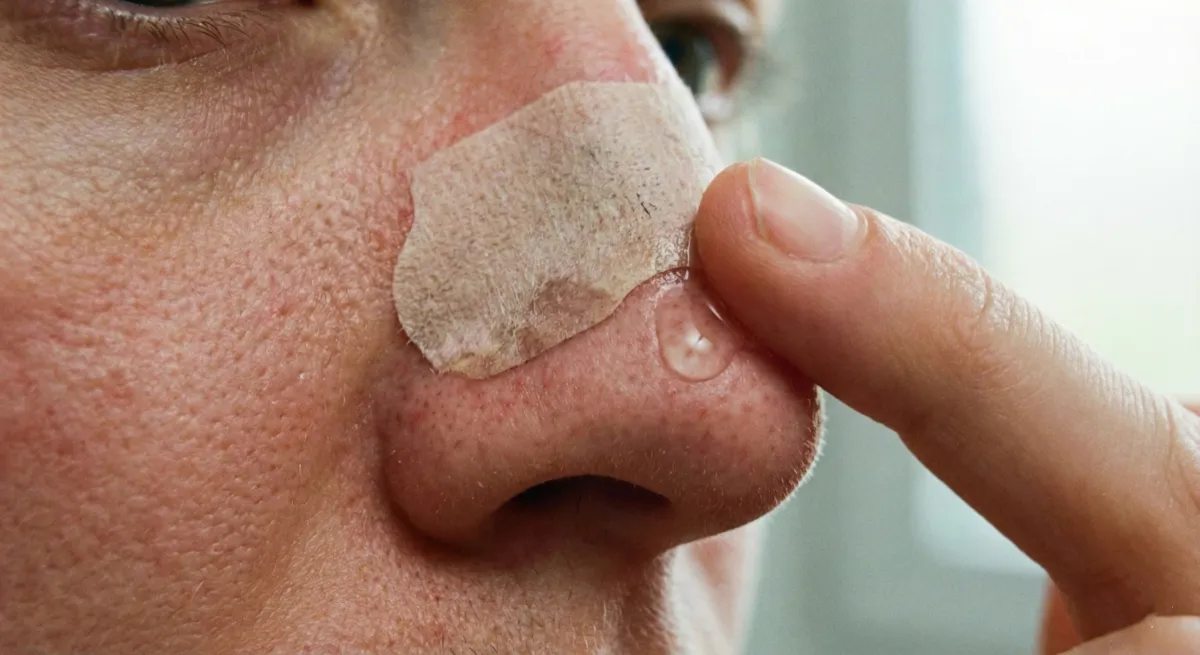
Adhesives behave differently, and the differences land exactly where sensitive-skin users feel them:
| Acrylic | Silicone | |
|---|---|---|
| Hold | Stronger; handles sweat and movement well | Solid but gentler |
| Removal | Can feel more aggressive on delicate skin | Removes gently; often repositionable |
| Cost | Mid | Higher |
| Best for | Sport / high-sweat / bearded users | Sensitive-skin, sleep and premium lines |
Ask which one you’re getting, and why it fits a sensitive-skin positioning. The honest answer is usually silicone or a softened acrylic tuned for sleep versions — confirmed by sample, not by catalog copy.
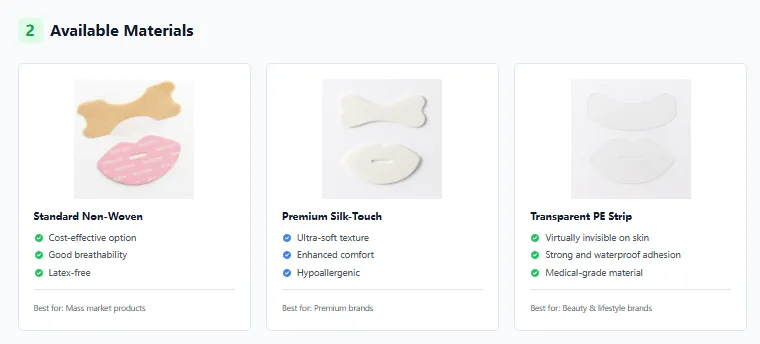
The backing matters too, because skin reacts to the whole laminate, not just the glue: the line runs non-woven, silk-touch and transparent PE backings, and a “gentle” adhesive on a stiff backing still wears rough. Ask for the backing material by name and sample the combination.
Question 2: how is it tested?
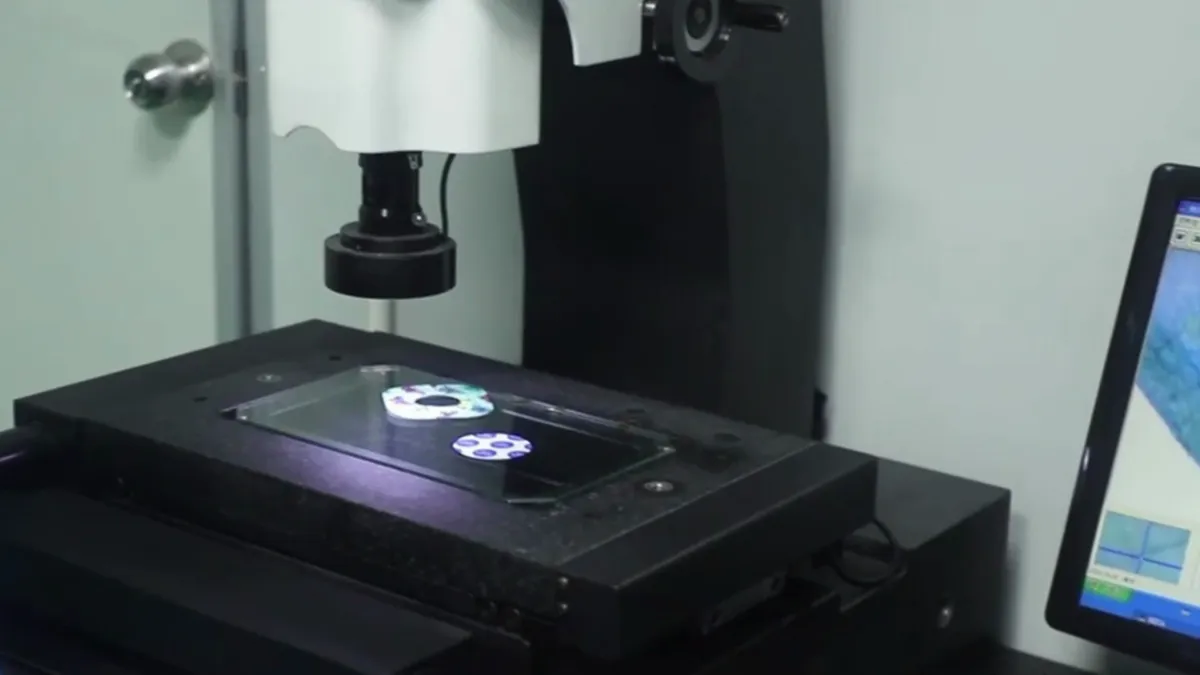
“Gentle” without evidence is marketing. On the production side, adhesion and hold are measured on a peel-strength tester and a retentivity tester — so you can compare removal force across adhesive options rather than trust an adjective. For skin contact, the questions worth asking by endpoint: is there biocompatibility documentation to ISO 10993, and does it cover the endpoints that matter for a skin-worn strip — ISO 10993-5 (cytotoxicity) and ISO 10993-10 (skin irritation and sensitization)? A supplier who can name the endpoints and hand over per-product test reports on request is answering a different question than one who repeats the word “gentle.”
Question 3: which documents can you get?
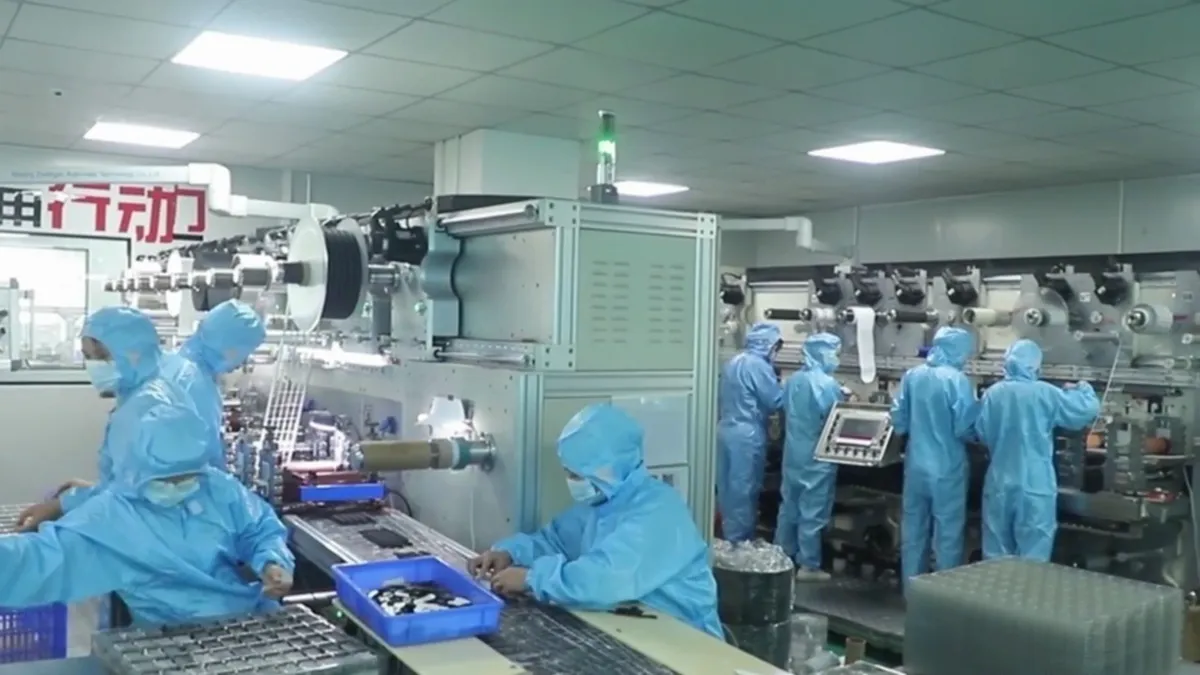
For a sensitive-skin positioning, documents are your protection. The working set to ask for: per-product test reports, material declarations, biocompatibility documentation to ISO 10993, and the material information sheet for the exact backing and adhesive you’ve sampled. Material claims such as latex-free or hypoallergenic can be confirmed per version — get them in writing before you put them on a listing, because a wrong claim is your liability. Certificates renew on a cycle, so ask for current versions on request rather than a PDF that may already be stale.
Where I’d tell you to be careful
Plainly: don’t print “hypoallergenic” or “safe for all skin” on packaging before it’s confirmed for your exact material version — and don’t imply a medical benefit. The check I’d run before any claim goes live: does a material declaration exist for this exact SKU, and do the ISO 10993-5 and -10 reports cover the laminate as ordered? If either answer is “not yet,” the claim waits. Position it honestly: a gentler adhesive option, tested, with documents on request. That’s both safer and more credible than a blanket promise.
图片建议:
- [Image 1] 内容:acrylic vs silicone 胶水特性对比 / 文件名:`sensitive-skin-nasal-strip-adhesive-types.jpg` / ALT:Acrylic vs silicone adhesive for sensitive-skin nasal strips / Caption:Adhesive type drives hold and removal feel. / prompt:”clean comparison graphic acrylic vs silicone adhesive properties, neutral background”
- [Image 2] 内容:剥离力测试 + 文件清单示意 / 文件名:`nasal-strip-adhesion-test-documents.jpg` / ALT:Adhesion testing and documents for sensitive-skin nasal strips / Caption:Ask for testing and documents, not just a label. / prompt:”peel-strength test and a document checklist, minimal, neutral”
内链建议:
- `private label nasal strips manufacturer` → private-label-nasal-strips-manufacturer / 位置:第 2 段
- `document checklist` → private-label-nasal-strips-document-checklist / 位置:documents 段
- `sample kit` → Sample Kit 承接页 / 位置:CTA
- `custom nasal strips with logo` → custom-nasal-strips-with-logo-what-can-be-customized / 位置:material 段
外链建议: 生物相容性引 ISO 10993(权威);不链竞品;不链声称疗效来源。
FAQ:
- What adhesive is best for sensitive-skin nasal strips? It depends: silicone removes more gently (good for delicate skin) at higher cost; acrylic holds stronger. Match to your audience and test both.
- Are these hypoallergenic / latex-free? Material claims can be confirmed per version — get them in writing before using them on a listing; don’t assume.
- How is “gentle” adhesion verified? Removal force is measured on a peel-strength tester; skin-contact safety is assessed to ISO 10993.
- What documents can I get? Test reports and material declarations on request; confirm the exact set for your market.
- Can I claim it’s safe for all skin? No — avoid blanket safety or medical claims; position it as a gentler, tested option.
- Can I sample different adhesives? Yes — request samples across adhesive types (acrylic vs silicone) and backings, and test removal on your audience before you commit.
总结: For sensitive-skin nasal strips, source on adhesive type, testing, and documents — not the label. Compare acrylic vs silicone, ask for peel-strength/retentivity testing and ISO 10993 biocompatibility, and confirm material claims per version in writing. Position honestly as a gentler tested option. Request samples across adhesive options to decide.
诊断自检(B偏 · 合规重点)
people-first ✅ · 触发器正文(胶水类型/测试/文件) ✅ · 活人感(敢说不要写hypoallergenic/safe for all) ✅ · 合规:latex-free/hypoallergenic 一律 per version/on request,无疗效,守 Claims Boundary,标 pending_review 人审 ✅ · 唯一性:敏感肌胶水专题,独立角度 ✅
For sensitive-skin nasal strips, source on adhesive type, testing, and documents — not the label. Compare acrylic vs silicone, ask for peel-strength/retentivity testing and ISO 10993 biocompatibility, and confirm material claims per version in writing. Position honestly as a gentler tested option. Request samples across adhesive options to decide. Ask for adhesive types and backing options in a sample kit for your audience.
FAQ
What adhesive is best for sensitive-skin nasal strips?
It depends: silicone removes more gently (good for delicate skin) at higher cost; acrylic holds stronger. Match to your audience and test both.
Are these hypoallergenic / latex-free?
Material claims can be confirmed per version — get them in writing before using them on a listing; don’t assume.
How is “gentle” adhesion verified?
Removal force is measured on a peel-strength tester; skin-contact safety is assessed to ISO 10993.
What documents can I get?
Test reports and material declarations on request; confirm the exact set for your market.
Can I claim it’s safe for all skin?
No — avoid blanket safety or medical claims; position it as a gentler, tested option.
Can I sample different adhesives?
Yes — request samples across adhesive types (acrylic vs silicone) and backings, and test removal on your audience before you commit.
About the author — Nancy is the founder of Vitazora, a specialist manufacturer of nasal strips and mouth tape for global brands. After six years across export trade and the factory side of skin-safe adhesive manufacturing, she helps DTC and distributor brands get from sample to a safe first order — without the compliance and reorder mistakes that sink new launches.
Note: specifications, MOQ, certifications and timelines are confirmed per product version and target market before quoting. Nasal strips and mouth tape are positioned for breathing comfort and are not described as treating any medical condition.
For brands and wholesale buyers: evaluate quality and customization options before bulk ordering. Free samples, shipping applies.
Request samples →